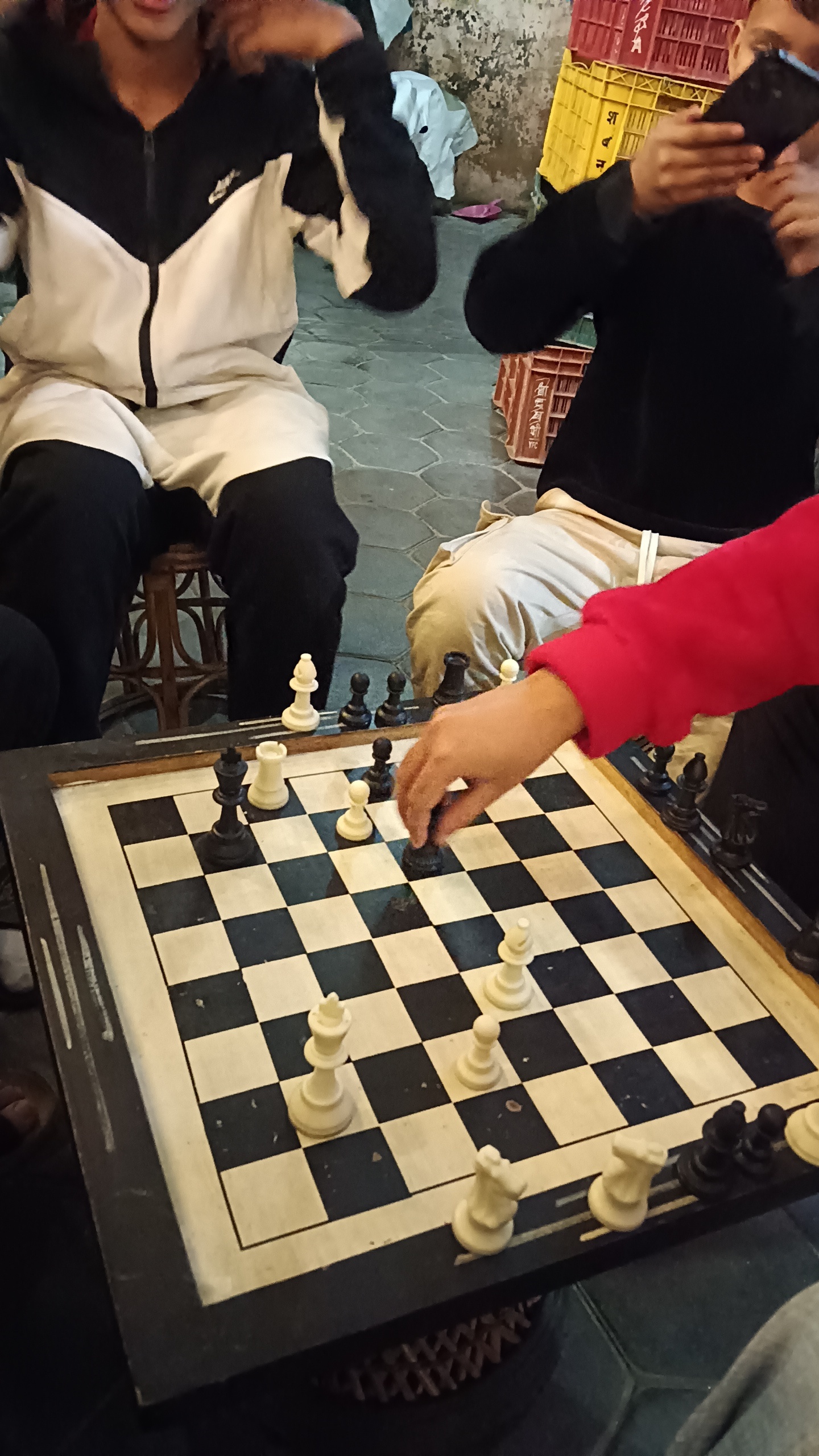
Chess is often called "the game of kings," and for good reason. It sharpens the mind, teaches patience, builds resilience, and connects millions of people across cultures and languages. In many ways, chess is one of the healthiest hobbies a person can have.
But there's another side to chess — one that doesn't get talked about enough.
As chess Grandmaster David Pruess puts it, chess players have cried, stabbed themselves in the head with pens, kicked holes in hotel room walls, and driven others insane with long-winded laments about games that got away. The same game that brings joy can also bring torment. The line between passion and addiction is thinner than many realize.
What Chess Addiction Looks Like
Chess addiction doesn't look like addiction in the traditional sense. There's no substance involved, no physical withdrawal, no obvious harm to the body. But the psychological grip can be just as powerful.
Consider this real account from The Atlantic:
I wake one morning realizing I haven't heard a word of what anyone's said for nearly three days. I have ignored the news, have ignored myself, have been thinking only of chess. I resolve to end my addiction, and so I delete my account. My abstention lasts 16 hours. I make a new account. In six days, I play 578 games.
This isn't just someone who enjoys chess. This is someone whose emotional state has become entirely dependent on a game — where winning brings euphoria and losing brings thoughts of self-harm. The author describes their chess play as "a daily predictive weatherglass": good days mean feeling alive; bad days mean feeling certain their life will never come to any good.
Why Chess Is So Addictive
Chess has a unique combination of features that make it dangerously easy to overdo:
1. The Ego Trap
Chess feels like a direct measure of intelligence. When you lose, it can feel like proof that you're not smart enough, not good enough. When you win, it feeds a need for validation. Pruess identifies this as one of the three major dangers of chess — the desire to win every game and be better than everyone else, which engages the ego in unhealthy ways.
2. The "Just One More" Loop
Online blitz and bullet chess are designed for endless play. A game takes 3–5 minutes. You lose? You want redemption. You win? You want to keep the streak going. Before you know it, hours have disappeared.
3. The Escape
In Vladimir Nabokov's novel The Luzhin Defense, the chess-addicted protagonist leafs through a magazine, indifferent to images of Niagara Falls, starving children, and attempted assassinations. Only a chessboard catches his eye. The real world passes by "with a hasty rustle, and suddenly stops."
For many, chess becomes a refuge from anxiety, depression, or the overwhelming noise of the world. The problem is when the refuge becomes a prison.
The Warning Signs
⚠️ Ask Yourself
- Do you play despite negative consequences? Missing sleep, neglecting work, or withdrawing from relationships to play more?
- Do you feel unable to stop? Have you tried to cut back and failed?
- Does your mood depend on your results? Do wins make you euphoric and losses make you despair?
- Are you playing to escape? Is chess your primary way of avoiding difficult emotions or responsibilities?
- Have you lost perspective? Do you find yourself more invested in your online rating than in real-life goals?
If several of these ring true, it may be time to reassess your relationship with the game.
Healthy Passion vs. Unhealthy Obsession
Chess itself isn't the enemy. The question is how you engage with it.
✅ Healthy
- Setting clear time limits and sticking to them
- Playing for enjoyment and learning, not just rating points
- Maintaining balance with work, relationships, and other interests
- Being able to walk away after a loss without spiraling
❌ Unhealthy
- Playing until 3 AM on a work night, again and again
- Feeling genuine despair or rage after losses
- Using chess to avoid dealing with real-life problems
- Losing interest in things you used to enjoy
- Lying to others about how much you play
Some in the chess community argue that chess addiction is a "healthy addiction" compared to drugs, alcohol, or gambling. But this framing misses the point. Addiction is defined not by the substance or activity, but by the loss of control and the negative impact on your life. Chess can absolutely qualify.
Finding Balance
If you recognize yourself in the warning signs, here are some strategies that have helped others:
💡 Strategies for Balance
- Set hard boundaries. One recovering player recommends setting aside a specific half-hour per day for chess and sticking to it. Knowing you have dedicated time can reduce the anxiety of "missing out."
- Use technology to help. Website blockers, time-limit apps, or even asking a friend to hold you accountable can create friction between impulse and action.
- Reframe your mindset. Instead of "I have to stop playing chess," try "I want to give myself a reason to do something cooler." Having goals outside of chess — fitness, friendships, creative projects — gives your brain something else to invest in.
- Seek professional help if needed. If chess is masking depression, anxiety, or other mental health challenges, a therapist can help you address the root causes rather than just the symptoms.
- Remember: it's okay to take a break. Chess will still be there when you come back. The board doesn't disappear. But your relationships, your health, and your peace of mind are far more fragile.
Final Thoughts
Chess is one of humanity's greatest inventions. It teaches us to think ahead, to accept consequences, to find beauty in complexity, and to lose with grace. But like any powerful tool, it can be misused.
The goal isn't to quit chess — it's to have a relationship with it that enriches your life rather than consuming it. The best chess players aren't necessarily the ones who play the most games. They're the ones who have mastered not just the board, but themselves.
As one player wisely noted: "All of us chess players can be prone to going into a chess-playing shell, so don't be too ashamed of getting in a rut even if it's lasted a while."
The first move toward change is recognizing the pattern. The second is deciding to make a different one.